What the Medicaid Cuts Mean for Seniors and Rural Communities
If you care about older Americans and keeping local communities strong, you should be alarmed by the Medicaid cuts that are coming.
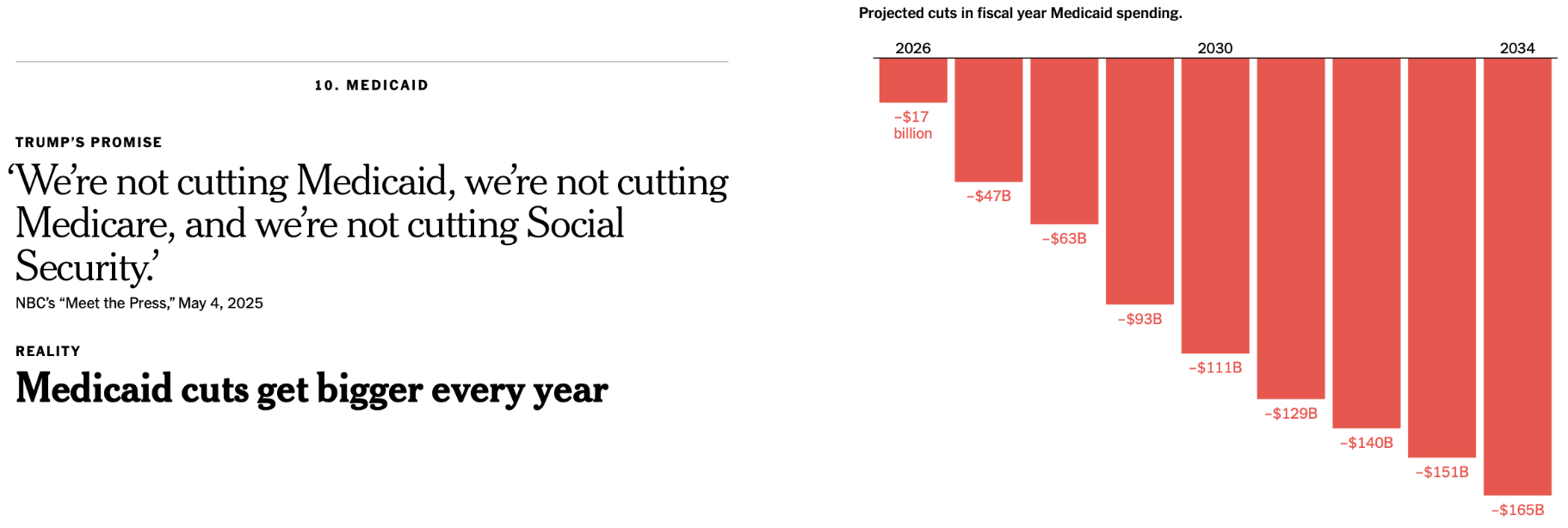
The Medicaid reductions in the One Big Brutal Bill Act (OBBBA) passed into law last year (and shown in the graphic) have two consequences that deserve more attention:
First, nursing homes. Medicaid pays for the care of nearly two-thirds of nursing-home residents. Brown University researchers identified 579 facilities—about 4% of the nation’s nursing homes—as especially vulnerable because they depend heavily on Medicaid and already have low occupancy and poor financial indicators.
Second, rural hospitals. UNC researchers examined 2,170 rural hospitals and identified 338—about one in six—as particularly exposed because they rely heavily on Medicaid, have operated at a loss for three consecutive years, or both. They could be forced to eliminate services, convert to smaller facilities, or close.
These are risk estimates, not predictions that every identified facility will close. But even service and staffing reductions would leave seniors traveling farther for emergency care and families with fewer options for long-term care.
The law includes $50 billion for rural health over five years. However, KFF estimates that it will reduce federal Medicaid spending in rural communities by $137 billion over ten years.
Whatever our politics, I think we should ask whether tax cuts are worth putting nursing homes and rural hospitals under even greater financial pressure—and urge Congress to protect them before the deepest cuts take effect.
For older Americans who depend on them, losing a nursing home, an emergency room, or a nearby hospital certainly doesn’t sound like Peace for Seniors.